
How to tire children at the seaside without screens
How to tire children at the seaside without screens
Natural fatigue instead of „planned entertainment”
Getting children tired at the seaside does not require animations, toys or screens. You just need to make good use of what the space offers: sand, wind, waves and a huge amount of space to move. The seaside environment itself is one big activity zone - you just have to let the children get into it.
This is not a „by force” fatigue, but one that comes naturally, through movement and exploration.
Sand as the world's best gym
Walking on sand is much more demanding than on hard ground. Each step collapses a little differently, which makes your muscles work harder, even when simply walking.
Children very quickly turn this into a game: running, jumping, climbing small hills, rolling. It all looks like casual play, but in reality it involves the whole body.
The effect? Fatigue comes on its own, without any exercise „for exercise's sake”.
Waves as a never-ending attraction
The sea is a natural generator of movement. Running in front of the waves, jumping over the water, running away from the shoreline - these are games that can go on for a very long time because they never repeat themselves in exactly the same way.
Children get into the rhythm of the waves and don't even notice how much time they spend moving. This is one of those places where „five more minutes” can turn into an hour of activity.
Dunes and rough terrain
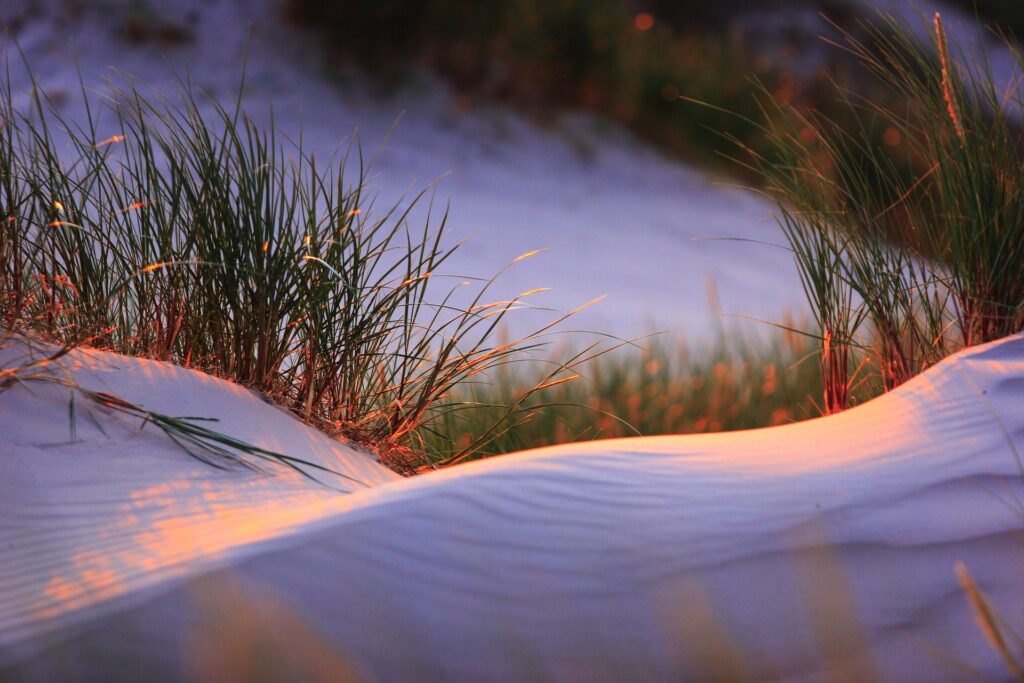
If there are sand dunes in the area, this is one of the best „natural workouts” for children. Going uphill on the soft sand, going down, balancing - it all takes more energy than a normal walk.
The children treat it as an adventure rather than an effort. Each dune becomes a challenge to conquer.
Plays that „extend” themselves”
The best seaside games are those that have no end or specific purpose. Examples:
- building and rebuilding sandcastles
- digging tunnels and channels for water
- searching for the „most interesting treasures”
- drawing routes and running them
- games of „who gets to the point faster”
Such activities naturally extend movement time because children are constantly improving, changing and developing something.
Group movement has a double effect
If there are more children, the energy grows even faster. Running together, races, shared tasks - it all makes the movement more intense and engaging.
In a group, children are less likely to stop because play is constantly „moving forward”.
No screens = more ideas
The most interesting thing is that the less digital stimuli there are, the more ideas for play of their own. At the seaside, children very quickly start to create scenarios themselves: expeditions, missions, competitions, exploring „unknown territories”.
They don't need instructions - all they need is space.
Natural fatigue that works best
The greatest advantage of „coastal” fatigue is its quality. It is not a fatigue resulting from compulsion, but from the joy of movement.
The children are active, engaged, often laughing and don't notice that their energy is gradually running out. And when they return, they fall asleep quicker and calmer - because the body has done exactly what it was designed to do: move in nature.