
Amber on the beach at Łeba – an autumn treasure hunt on the Baltic coast
Amber on the beach at Łeba – an autumn treasure hunt on the Baltic coast
Autumn on the Baltic coast isn’t just about empty beaches, the sound of the waves and long walks. It’s also the perfect time to try and find one of the most distinctive treasures of the Polish coast – amber. These small, golden nuggets have fascinated tourists and collectors for centuries, and searching for them can turn an ordinary walk into a real adventure. All it takes is a little patience, a keen eye for the sand and a bit of luck.
Łeba, with its wide beaches and open access to the Baltic Sea, is the perfect destination for such autumn excursions. Once the tourist season is over, things quieten down by the seaside, and the autumn winds and storms can wash up some real surprises on the shore. During your stay at Morski Tygl, hunting for amber can be a great way to spend an active afternoon, enjoy a romantic stroll or have some fun with the children.
Why is autumn a good time to go amber hunting?
Amber can be found on the Baltic coast all year round, but autumn is a particularly interesting time for those searching for it. This is all down to the changing weather. Stronger winds and larger waves stir up material lying on the seabed, which they may then wash up onto the shore along with shells, twigs and fragments of marine vegetation.
The best chance of making interesting finds often comes after storms, when the sea begins to calm down. At such times, you can spot distinctive bands of small objects washed up by the waves on the beach. It is amongst these that you should look out for small pieces of amber.
In autumn, one added bonus is that there are fewer tourists. The beaches are no longer as crowded as they are in July or August, so it’s easier to take a leisurely look at what the sea has left behind.
Where can you find amber on the beach in Łeba?
Contrary to what one might think, amber does not always lie on perfectly clean, light-coloured sand. It is far more common to find it in places where the waves have left behind small twigs, shells, bits of vegetation and other light-weight materials.
Whilst out walking, it’s worth keeping an eye on the shoreline and looking out for darker bands of sediment. It is precisely there that you may find small pieces of amber, which at first glance resemble ordinary pebbles.
There’s no need to rush along the whole beach. It’s much better to choose a quiet stretch and look closely at the sand. Sometimes a small nugget is literally just a few centimetres from your shoes.
It is worth bearing in mind that finding amber is never guaranteed. Even after a severe storm, the sea may not wash up any large pieces. However, the sheer pleasure of the search often proves just as rewarding as the treasure itself.
How can you tell if amber is genuine?
Not every yellow or orange pebble found on the beach is amber. The sea also washes up pieces of glass, plastic and minerals that may resemble golden resin.
Baltic amber is the fossilised resin of trees from millions of years ago. It is usually relatively light in weight and feels warmer to the touch than ordinary stone. It can be light yellow, honey-coloured, orange, brown or even milky in colour.
One home method for carrying out a preliminary test on a find is to place it in a salt water solution of the correct concentration. Amber may float in it, whilst most ordinary stones sink to the bottom. However, this is not a definitive test, as some other materials may also float.
It is best to treat such attempts as a curiosity, and in the case of a particularly interesting find, to consult a specialist about its origin.
Hunting for amber as an idea for a family walk
Autumn amber hunting can be a great activity for families with children. Instead of just a stroll along the beach, you could organise a little treasure hunt. Each participant is given the task of looking out for interesting objects left behind by the sea.
Children often look at shells, pebbles and bits of wood with great interest. Even if you don’t manage to find any amber, such an outing can still result in a collection of unusual souvenirs and photos taken together.
It’s also a good opportunity to explain to the little ones where amber comes from, why it ends up on the beach, and how the Baltic Sea changes during autumn storms.
However, safety is the most important thing. It is best to organise searches when the sea is calmer, once dangerous conditions have subsided. You should not enter rough water or approach strong waves. Unknown pieces resembling amber should not be put in your pockets, as some dangerous substances, including white phosphorus, may look similar.
What should you take with you on an autumn amber hunt?
You don’t need any specialist equipment to get started. The most important things are comfortable, waterproof shoes, a warm, windproof jacket and a small bag to safely store any finds you’ve identified.
In autumn, it’s a good idea to dress in layers, as the weather on the Baltic coast can change very quickly. Even a sunny morning can turn into a chilly, windy afternoon.
On a longer walk, a flask of hot tea will also come in handy. This way, you can combine your exploration with a rest on the beach and watching the sea.
There’s no need to treat the trip as a competition. Sometimes the best option is a leisurely stroll, during which we stop every now and then to take a closer look at the sand.
Łeba in autumn – so much more than just amber
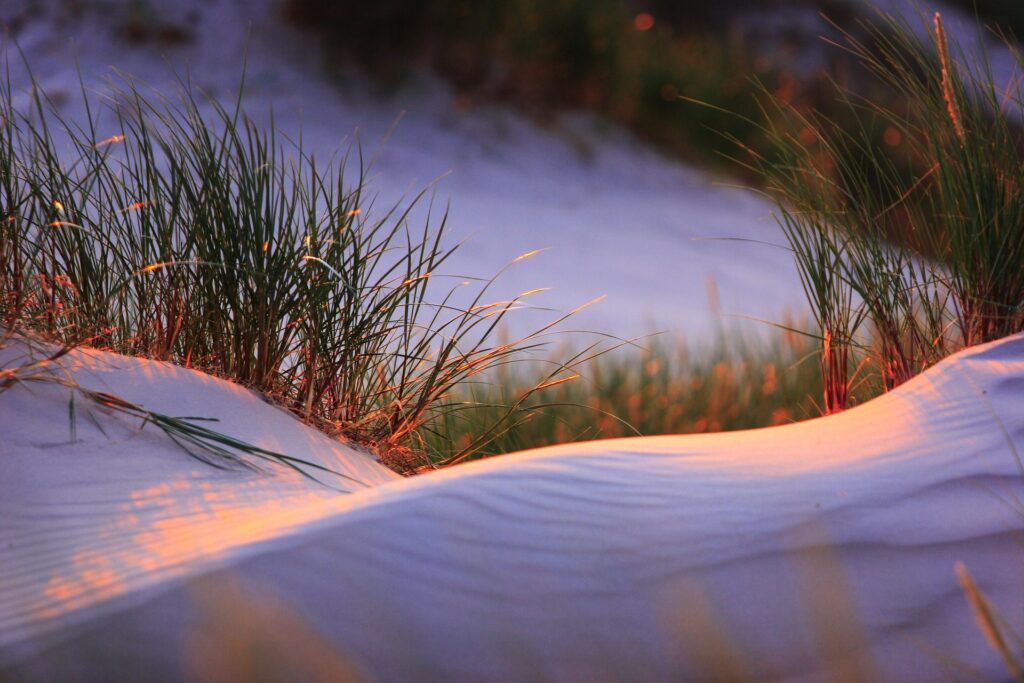
Hunting for amber is just one of the reasons why it’s worth visiting Łeba in the off-season. In autumn, the wide beaches become quieter, and the coastal landscapes take on a completely different character.
You could start the day with a walk along the Baltic coast, then go for a cycle ride or visit the nearby nature reserves. If the weather’s fine, it’s worth staying on the beach a little longer to watch the light change.
A trip like this doesn’t require any detailed planning. All you need is a few days off and a desire to spend time close to nature. Autumn, after all, shows Łeba from a completely different perspective to the summer holiday season.
Morski Tygiel – a base from which to explore Łeba in autumn
During your stay at Morski Tygl, you can combine relaxation with exploring the lesser-known attractions of the coast. Amber hunting is an activity suitable for couples, families with children and anyone who simply enjoys long walks by the sea.
You don’t need to find a big nugget to consider the trip a success. Sometimes the greatest reward is simply a few hours spent in the fresh air, watching the waves and having the chance to get away from everyday responsibilities.
And if, whilst out for a walk, you happen to find a small piece of amber, it will make a unique souvenir of your autumn stay in Łeba. A souvenir we didn’t buy in a shop, but found ourselves, somewhere amongst the sand, the shells and the sound of the Baltic Sea.
Autumn by the sea can hold some surprises. Sometimes, all you need to do is look down at your feet to discover something truly special.