
A storm over the Baltic Sea in autumn – why is it worth visiting Łeba out of season?
A storm over the Baltic Sea in autumn – why is it worth visiting Łeba out of season?
Autumn on the Polish coast is a completely different experience to summer. Instead of calm waters, beach windbreaks and the hustle and bustle of the holiday season, there are stronger winds, high waves and extraordinary landscapes. It is at this time of year that the Baltic Sea reveals its most spectacular side. A storm by the sea attracts people who enjoy observing nature, photographing extraordinary phenomena and exploring coastal towns outside the main tourist season. Łeba is one of the places where the Baltic Sea in autumn can make a truly lasting impression.
A trip to the seaside in November doesn’t have to mean missing out on attractions. Quite the opposite – an autumn weekend in Łeba can offer a completely different experience to a summer holiday. A stroll along the beach after a storm has passed, watching the waves from a safe distance or photographing the dynamic sky are just a few ideas for how to spend your time. During your stay at Morski Tygl, it’s well worth discovering this lesser-known side of a seaside holiday.
Why do storms occur on the Baltic coast in autumn?
Autumn is a time when active low-pressure systems pass over Europe more frequently. They are accompanied by stronger winds, changes in atmospheric pressure and more dynamic weather. Out on the open sea, the wind can whip up waves over a wide area, causing the water to become very choppy. That is why, in autumn and winter, the Baltic Sea often looks completely different from how it does on calm summer days.
However, not every windy day means a storm. Its nature is determined, amongst other things, by the strength and direction of the wind, as well as the conditions at sea. For tourists, the most important thing is that even without extreme weather, the autumn coastline can look incredibly spectacular. Foaming waves, clouds sweeping across the horizon and the wind whipping up grains of sand create a landscape that is hard to experience on a typical holiday.
What does the beach in Łeba look like during an autumn storm?
The wide beaches of Łeba offer views across the vast expanse of the Baltic Sea. When the wind picks up, the waves crash against the shore and the characteristic sound of the sea grows much louder. The water can take on darker shades, whilst the white foam contrasts sharply with the wet sand. The whole landscape is often dominated by low, fast-moving clouds.
The most interesting moments are when the weather starts to change. After a strong wind, the sky may clear, and the sun’s rays illuminate patches of the sea and the beach. Such conditions create unique photographic opportunities and make every walk look different. It is worth remembering, however, that during a storm, safety is more important than a spectacular photograph, so you should keep a safe distance from the churning water.
A walk after the storm – discovering the treasures of the Baltic Sea
One of the best times to visit the beach is after a strong wind has died down, when conditions become safer. The sea can leave shells, pieces of wood, seaweed and small objects washed up by the waves on the sand. A walk along the shore can then turn into an interesting expedition, during which we can observe the traces left by the elements. It is also an opportunity to see just how much the sea can change the appearance of the beach in a short space of time.
After the autumn storms, some walkers also go in search of amber. There’s no guarantee of finding golden nuggets, but simply looking closely at what the Baltic Sea has left behind can be an interesting experience. However, you must exercise caution around unfamiliar objects that may resemble amber, and avoid touching any suspicious substances. Most importantly, you should only plan your trip when the weather and sea conditions allow you to stay on the beach safely.
Photographing the Baltic Sea in autumn – extraordinary light and landscapes
An autumn storm is a wonderful source of inspiration for anyone interested in photography. You don’t need a professional camera to capture the unique character of the coastal landscape. Even a modern mobile phone can be used to take interesting photos of waves, clouds and wide beaches. The most important thing is to choose the right spot, watch the light and keep a safe distance from the water.
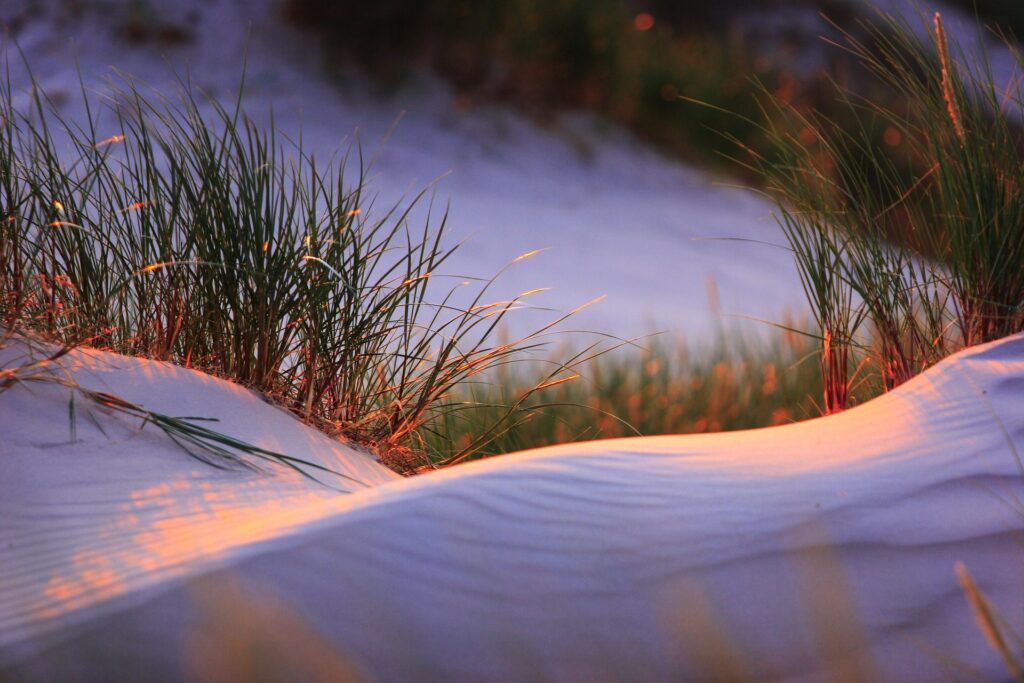
Photographs taken after a weather front has passed look particularly striking, when the dark clouds begin to give way to the sun. Wet sand can reflect light, whilst foaming waves create a dynamic foreground. In autumn, the sun is lower on the horizon, so you can capture interesting lighting effects even during the day. A photographic walk like this could become one of the most memorable moments of your stay in Łeba.
How can you safely watch a storm at the seaside?
Observing the rough Baltic Sea requires common sense and proper preparation. Strong winds, high waves and changing conditions can pose a danger even to those who are familiar with the coastal environment. You should not approach the water’s edge during a storm, walk onto breakwaters or remain in areas exposed to the force of the waves. It is also important to heed all local warnings and access restrictions.
Before setting out, check the weather forecast and any weather warnings. If conditions are dangerous, it is best to avoid visiting an open beach and wait for the weather to improve. You can also admire a storm from a safe distance. The Baltic Sea in autumn remains just as impressive, even if you don’t get within a few metres of it.
Łeba in autumn is not just about the rough sea
A visit to the Baltic coast in the off-season offers far more to do than just watching storms. When the weather improves, you can go for a walk through the coastal forests, visit the area around Słowiński National Park, or plan a trip to the shifting sand dunes. In autumn, such excursions are quite different from those in summer, as the popular routes are usually quieter. The cooler temperatures also make it easier for those who aren’t keen on the summer heat to get out and about.
It’s worth leaving yourself some flexibility when planning the coming days. If it’s very windy by the sea, you can opt for a more relaxed way to unwind, and head back to the beach once the weather improves. An autumn weekend doesn’t have to be packed with activities from morning till night. Sometimes, the greatest pleasure comes from taking your time and being able to adapt your plans to how you’re feeling.
Morski Tygiel – discover Łeba in its most extraordinary form
An autumn stay at Morski Tygl can be an opportunity to discover Łeba from a completely different perspective. Instead of the summer crowds, you can enjoy a more peaceful atmosphere, watch the changing landscape and savour the charms of the coastal countryside. A storm over the Baltic Sea is one of the most spectacular phenomena of this time of year, but the calm days following strong winds can be just as interesting. It is then that the beach once again becomes a place for long walks and relaxation.
You don’t have to wait until next summer to plan a trip to the Polish seaside. Łeba in November can surprise you with its extraordinary light, dynamic weather and a sense of space that’s often lacking during the summer holidays. All you need is a warm jacket, comfortable shoes and a willingness to encounter the Baltic Sea at its most rugged. And the sight of mighty waves, observed from a safe distance, may stay in your memory far longer than many a summer’s day on the beach.