
Winter educational excursions in the Slovinski National Park
Winter educational excursions in the Slovinski National Park
Winter among the dunes and coastal nature
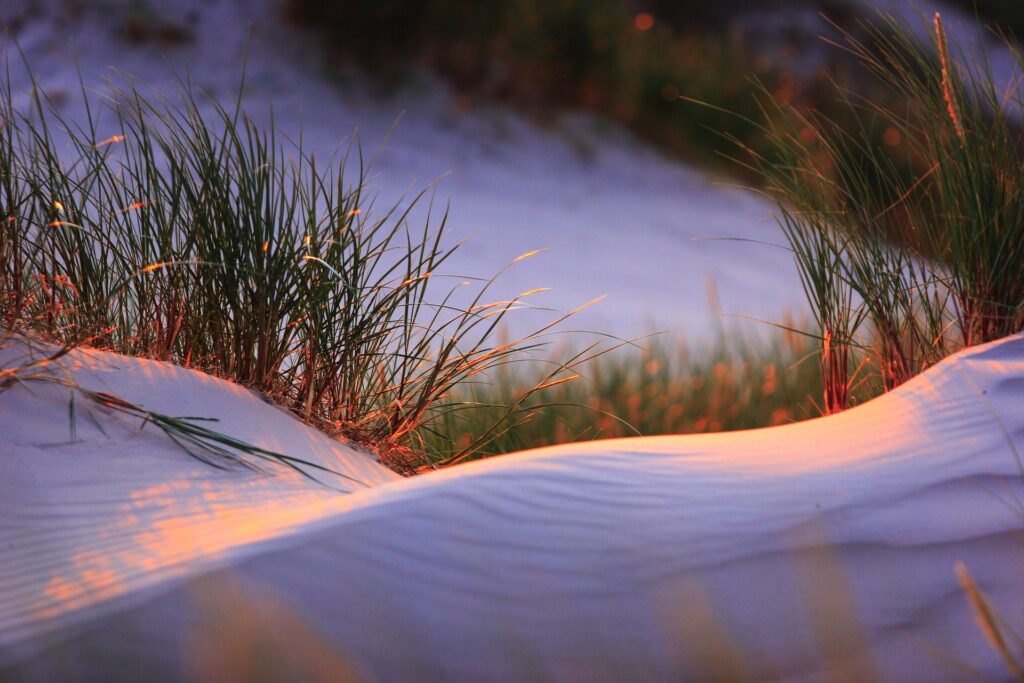
The winter landscape by the Baltic Sea can surprise you with its silence and raw beauty. One of the most unique places in the vicinity of Łeba is the Słowiński National Park - a space of moving dunes, coastal lakes and seaside forests. In winter, the park takes on a completely different character. The lack of crowds, quiet paths and cool, clear air create ideal conditions for family educational excursions.
This is the perfect time to show children nature in its rougher aspect and teach them to observe their surroundings carefully.
Field education - experiential learning
A winter trip to a national park can become a lively lesson in biology and geography. A hike among the dunes provides an understanding of how the wind shapes the landscape and why these forms are called mobile. Children can see how the vegetation changes according to the conditions - from harsh, sandy areas to more sheltered parts of the forest.
Observing animal tracks in the snow or wet sand is another learning opportunity. Tracking paw prints teaches patience and logical thinking. In winter, it is easier to spot the presence of wildlife because the footprints are more visible than in the summer season.
Lakes and birds in winter
The park has coastal lakes that attract numerous species of birds in winter. This is a great opportunity to introduce children to the world of ornithology. Binoculars and a simple bird atlas can turn an ordinary walk into a fascinating adventure.
Birdwatching teaches focus and respect for nature. It is useful to tell the youngest children about migration, the change of seasons and how animals adapt to winter conditions. Such knowledge, gained in the field, stays in the memory much longer than information read in a textbook.
Movement and health in a winter climate
A winter educational excursion is not only about learning, but also about physical activity. Walking along forest paths or along sand dunes oxygenates the body and strengthens immunity. The coastal air, rich in iodine, supports the respiratory tract and improves well-being.
It is important to be properly prepared - layered clothing, comfortable footwear and a thermos of warm drink. A well-planned route will allow you to combine education with comfort, so that the trip is enjoyable for the whole family.
How to plan a winter trip
Before setting off, it is advisable to check the current weather conditions and adapt the length of the route to the capabilities of the youngest participants. In winter, the day is shorter, so it is best to set off in the morning or early morning.
A simple list of „learning tasks” can be prepared: find three different types of footprints, observe a bird by the lake, count the layers of sand visible on a cross-section of a dune. Such small challenges engage the children and give the trip a purpose.
Back to comfort after a day in the field
After a few hours in nature, returning to Leba and relaxing in Morski Tyglu becomes a natural end to the day. The warm interior and peaceful atmosphere are conducive to taking stock of impressions. In the „Tam Gdzie zawsze” restaurant you can discuss together what you have managed to learn and see.
This rhythm - active outdoor education and relaxation in comfortable conditions - makes a winter trip to the seaside worthwhile and regenerative.
Winter as the best time to explore
Although many people associate a national park with summer hiking, winter offers a completely different perspective. The silence, lack of crowds and rugged landscape allow you to focus on the details. This is the perfect time to show children that nature is fascinating at any time of year.
Educational winter tours in the Slowinski National Park combine movement, learning and family experiences. This is a proposal for those who want not only to relax during the Baltic holidays, but also to broaden their horizons and get closer to nature.